Pepcid: an hour to work, a night of cover
| Product | Dosage | Quantity | Price | Order |
|---|---|---|---|---|
| Pepcid | 20mg | 28 pill | £20.00 £18.00 −10% | |
| Pepcid | 20mg | 56 pill | £33.33 £30.00 −10% | |
| Pepcid | 20mg | 84 pill | £45.56 £41.00 −10% | |
| Pepcid | 20mg | 112 pill | £56.67 £51.00 −10% | |
| Pepcid | 20mg | 168 pill | £70.00 £63.00 −10% | |
| Pepcid | 20mg | 224 pill | £77.78 £70.00 −10% | |
| Pepcid | 20mg | 336 pill | £92.22 £83.00 −10% |
| Product | Dosage | Quantity | Price | Order |
|---|---|---|---|---|
| Pepcid | 40mg | 28 pill | £17.78 £16.00 −10% | |
| Pepcid | 40mg | 56 pill | £32.22 £29.00 −10% | |
| Pepcid | 40mg | 84 pill | £42.22 £38.00 −10% | |
| Pepcid | 40mg | 112 pill | £54.44 £49.00 −10% | |
| Pepcid | 40mg | 168 pill | £70.00 £63.00 −10% | |
| Pepcid | 40mg | 224 pill | £83.33 £75.00 −10% | |
| Pepcid | 40mg | 336 pill | £105.56 £95.00 −10% |
Where does it sit between the alternatives?
Three tools, three different jobs.
Antacids neutralise acid already in the stomach. Effect in minutes, gone within the hour.
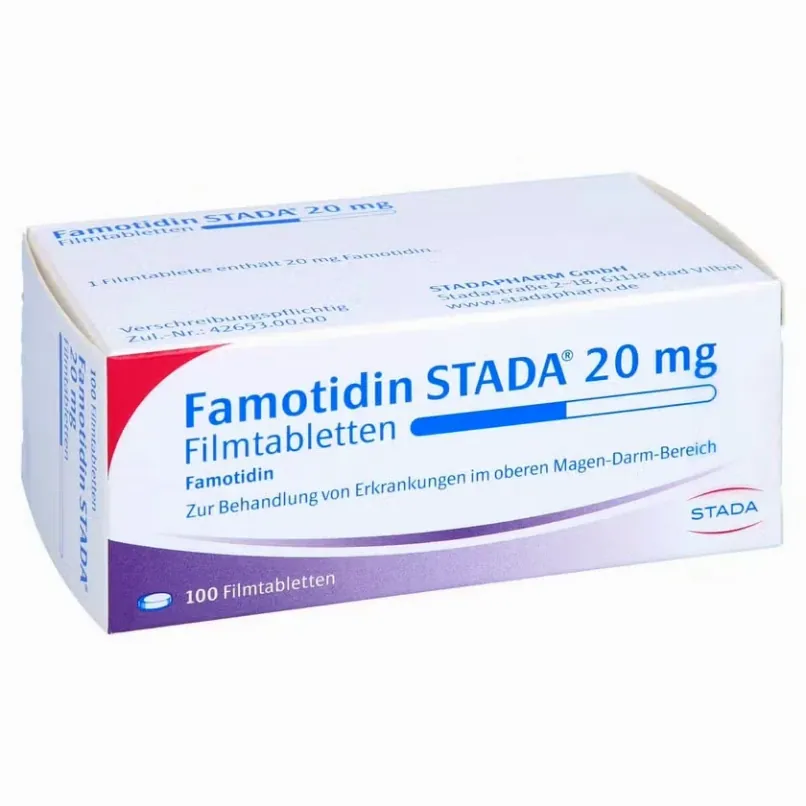
H2 blockers like this one reduce how much acid gets produced. About an hour to work, and the effect lasts most of a night.
Proton pump inhibitors shut down production more completely, but need several days of daily dosing to reach full effect.
So famotidine is the middle option: faster than a PPI, longer-lasting than an antacid. Best for predictable or occasional problems rather than continuous reflux.
What signal does it block?
Acid-producing cells in the stomach respond to several signals. One of them is histamine, acting on a different receptor from the one involved in allergy.
Famotidine blocks that receptor.
One of the main triggers for acid production is removed. Output falls substantialy, though not as completely as with a PPI, because the other signalling routes remain.
That partial effect is sometimes an advantage. Stomach acid has a purpose — it kills swallowed bacteria and helps absorb certain nutrients — and reducing rather than abolishing it is reasonable for intermittent problems.
How do you time it to the problem?
This is where it is genuinely useful, because you can aim it.
- Night-time symptoms: take it in the evening, before bed
- A meal you know will cause trouble: take it an hour or so beforehand
- Occasional use: as needed, rather than every day
Prevention works better than rescue. Once reflux has started and the oesophagus is already irritated, you are waiting an hour for relief.
Can it be combined with a PPI?
It can, and there is a specific arrangement some people end up with.
A PPI in the morning covers the day. Famotidine at bedtime covers the night, when PPI effect can wane and night-time acid breakthrough occurs.
That combination is used specifically for people whose main problem is waking with reflux. Worth mentioning if that describes you.
What side effects turn up?
- Headache
- Dizziness
- Constipation or diarrhoea
- Tiredness
Generally very well tolerated — one of the better tolerated acid medicines. Reduced kidney function means a lower dose.
In older people, confusion is occasionaly reported and tends to get attributed to anything but the tablet.
What reduces reflux without medicine?
- Nothing to eat for about three hours before lying down
- Smaller meals rather than large ones
- Raise the head of the bed on blocks — not extra pillows
- Losing weight around the middle, which has a large effect
- Less alcohol, coffee, chocolate, mint and fatty food
- Stopping smoking, which relaxes the muscular ring directly
- Looser waistbands
Extra pillows are the common mistake. Bending at the waist raises abdominal pressure, which can make reflux worse rather than better.
Could another medicine be causing it?
Quite possibly, and it is worth checking before adding another tablet.
Anti-inflammatory painkillers, certain blood pressure tablets, some osteoporosis medicines, iron supplements and some antibiotics all cause or worsen reflux.
If reflux started around the time a new medicine did, that connection is worth raising.
Which symptoms need investigating rather than treating?
- Difficulty or pain swallowing, or food sticking on the way down
- Unexplained weight loss
- Vomiting blood, or material like coffee grounds
- Black, tarry stools
- Persistent vomiting
- New symptoms starting after middle age
- Anaemia found on a blood test
Acid suppression can mask those by relieving the discomfort while whatever is behind it carries on. That is the main argument against simply taking something indefinitely and never getting looked at.
How to order without prescription
Occasional use suits keeping a pack in the cupboard rather than buying on the night.
You pick a strength, pick a pack size, type in where it should go, and confirm. No appointment, no form, no standing at a counter explaining yourself.
What turns up is a plain parcel. Nothing on the outside says pharmacy and nothing says what is inside. How quickly it arrives depends on where it is going.
What you pay tracks the strength and how many you buy at once. Buying more in one go brings the per-unit figure down.
When does it leave? On working days, which means UK bank holidays and weekends shift the whole sequence along. Order with a few days of margin if it matters to a date.
Further reading
Active substance: famotidine
Last updated: 16 September 2026
No reviews yet. Be the first to leave a review!
Write a Review
Your rating: