
Hair Loss
First it is more hair on the brush. Then thinning you can no longer arrange around. And the mirror reminds you every morning.
These treatments act on follicles that are still alive. Without prescription, in a plain parcel.
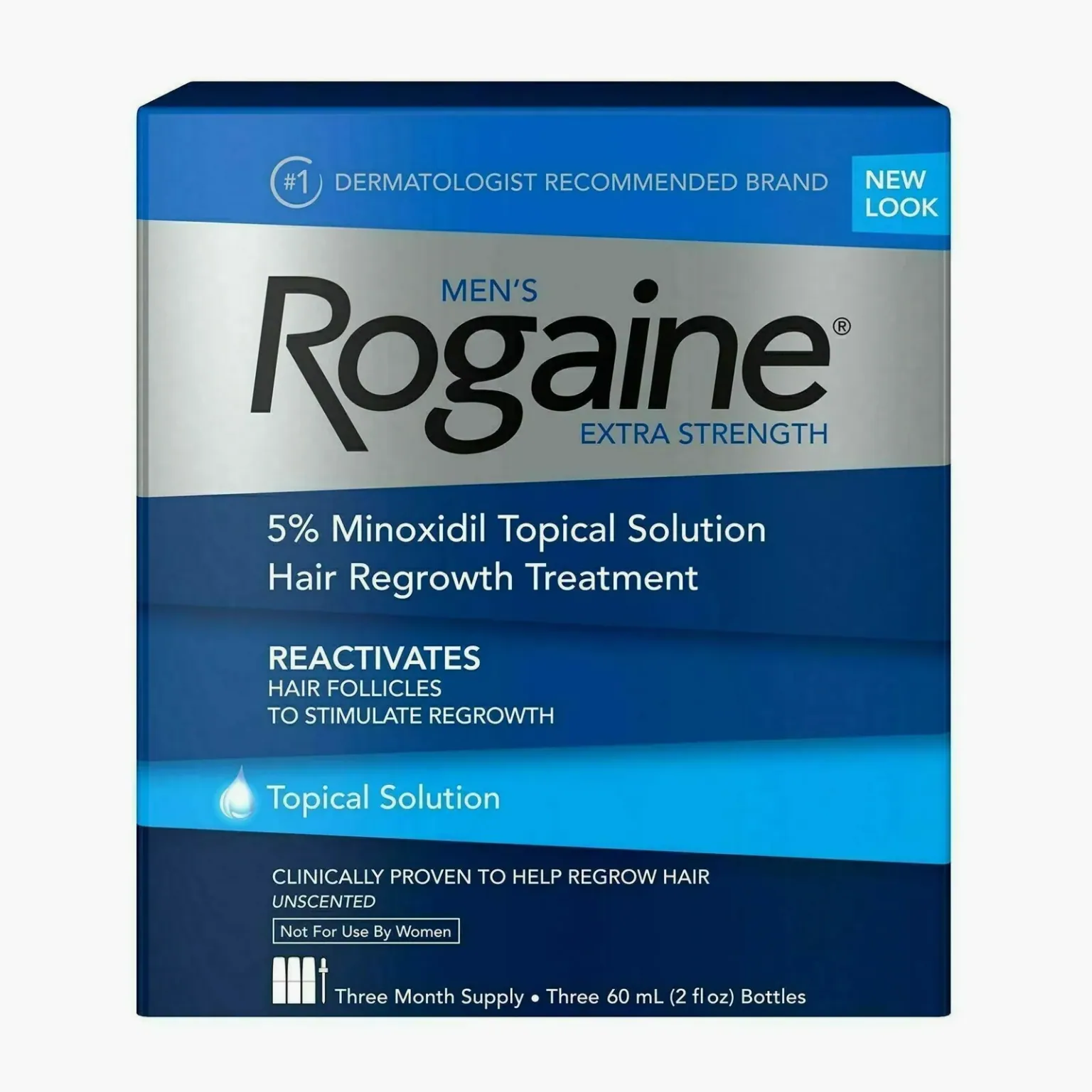
What happens to the follicle?
It shrinks, cycle by cycle.
In the most common pattern of hair loss, the problem is sensitivity to a hormone. Testosterone is converted in the skin into a more potent form, and follicles genetically sensitive to it respond by shrinking.
Each cycle the growing phase gets shorter. The hair produced is finer, shorter and lighter, until it is barely more than fuzz. Eventually the follicle stops producing anything.
Which sets the timescale for everything else. A follicle that has shrunk can still be stimulated. One that has closed cannot.
That is why these treatments work far better on thinning areas than on skin already bare, and why starting earlier gives better results.
What are the two approaches?
Topical treatments are applied to the scalp. They improve local blood supply to the follicle and extend the growing phase. They work where they are applied, and only there.
Oral treatments interfere with the hormone conversion, removing the signal that shrinks the follicle in the first place.
Both require the same two things: consistency, and patience measured in months.
Why does more hair fall out at first?
Because follicles are being pushed out of their resting phase into a new growth phase, and the new hair displaces the old one.
In the first weeks shedding often increases noticeably. It looks as though the treatment is making things worse. What falls out was already finished.
It usually lasts a few weeks. Real improvement generaly appears several months later.
Photograph your scalp at the start, same light, same angle. Change this slow is invisible in a mirror and obvious in pictures.
What happens if you stop?
You go back to where you started, and this is the thing to be honest with yourself about before begining.
None of these treatments cures anything. They hold the process back for as long as they are used.
Stop, and the follicles resume their programme. Within a few months the gains are generally lost.
So the real question is not "shall I try this for six months" but "am I willing to do this indefinitely".
Is it different for women?
The pattern is, and so are the causes.
Women rarely develop a receding hairline. The thinning is diffuse, most obvious along the parting.
And the causes are more varied: iron deficiency, thyroid problems, the period after childbirth, menopause, a change of contraception, severe stress, or restrictive dieting.
Which makes a blood test genuinely worthwhile first. If iron is low, correcting that often does more than any topical treatment.
Important: hormonal treatments in this group are absolutely contraindicated in pregnancy and when trying to conceive.
What should be excluded first?
- Iron or vitamin D deficiency
- Overactive or underactive thyroid
- A recent serious illness, surgery or high fever
- Certain medications
- Scalp conditions
- Very restrictive diets
- Years of tightly pulled hairstyles
Sudden heavy shedding, round bald patches, or a red and scaling scalp all point to something other than the common pattern and need looking at properly.
How to order without prescription
This is treatment measured in years, which is why most people buy in quantity rather than monthly.
You choose the product, the strength and the pack size, type in a delivery address and confirm. No appointment, no questionnaire, no standing at a counter explaining yourself.
Everything arrives in a plain parcel. Nothing on the outside names a pharmacy and nothing indicates the contents. How quickly it gets there depends on the destination.
What you pay tracks the strength and how much you buy at once. Larger quantities bring the per-unit figure down.
What about storage once it reaches you? Dry, at room temperature, in the blister. Not the bathroom cabinet, where steam gets at the foil, and not a car in July.