Neurology
Falling asleep mid-conversation is not tiredness. It is a fault in the mechanism that keeps you awake.
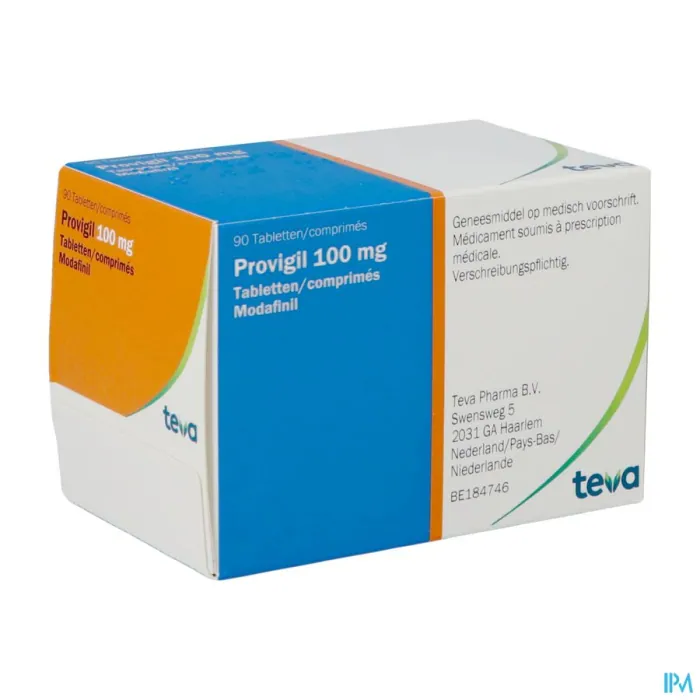
This group covers treatments for genuine disorders of wakefulness. Without prescription, in a plain parcel.
Is excessive sleepiness the same as being tired?
No, and the distinction determines whether medication is the right answer at all.
Being tired is the normal consequence of too little sleep, hard work or stress. The answer to that is sleep.
Pathological sleepiness is different. It means falling asleep involuntarily in situations where nobody would — mid-conversation, at a desk, at traffic lights. The mechanism that maintains wakefulness is not working.
That is a medical problem and it has specific causes.
What are the main causes?
- Narcolepsy, where the brain lacks a signalling molecule that maintains wakefulness. Often accompanied by sudden loss of muscle tone triggered by emotion
- Obstructive sleep apnoea, where breathing repeatedly stops during the night and sleep is fragmented without the person knowing
- Shift work sleep disorder, where the body clock and the work schedule are in permanent conflict
Sleep apnoea deserves emphasis because it is so common and so often missed. Loud snoring, witnessed pauses in breathing, waking unrefreshed, morning headaches and daytime sleepiness are the pattern.
Is treating sleepiness the same as treating apnoea?
No, and this is the most important point on the page.
In sleep apnoea the underlying problem is interrupted breathing, and that needs treating directly.
Taking something to mask the sleepiness while leaving the apnoea untreated does nothing about the consequences — raised blood pressure, heart strain, cardiovascular risk. And those are the serious part.
Medication for sleepiness has a place in apnoea, but only alongside proper treatment of the breathing, not instead of it.
How does wakefulness medication work?
The mechanisms are not fully mapped, which is unusual for drugs this widely used.
What is reasonably clear is that they act on the brain's wake-promoting systems, including those using dopamine, noradrenaline, histamine and orexin — the last being specifically deficient in narcolepsy.
They raise dopamine levels, but far more gradually and weakly than classic stimulants, without the sharp peaks those produce.
Which is why the experience is described as removing sleepiness rather than adding energy — less jittery, less of a crash, lower potential for dependence. Lower, not zero.
Why does timing matter?
Because these medicines have a long duration of action.
- Morning, for daytime sleepiness
- About an hour before a shift, for shift work
- Not late in the day
A dose taken in the afternoon can still be interfering with sleep at midnight — which then worsens the underlying problem.
Which interaction catches people out?
Contraception, and it is frequenly overlooked.
Some of these treatments induce liver enzymes that break down other medicines, including hormonal contraceptives — making them less reliable.
That effect persists for a period after stopping. Anyone relying on hormonal contraception needs an alternative or additional method.
Can any of this replace sleep?
No, and this is worth saying plainly.
These medicines mask sleepiness. They do not provide what sleep provides — the memory consolidation, physical repair, metabolic and immune functions.
Using them to sustain chronic sleep deprivation means accumulating the consequences while feeling able to continue, which is a worse position than simply being tired.
For a genuine sleep disorder they are a legitimate treatment. As a substitute for sleeping, they are borrowing against something that gets repaid eventually.
What should be reported?
Any rash during treatment means stopping and getting medical attention rather than waiting. Most rashes are harmless, but severe skin reactions have been reported with this group and the cost of waiting is high.
Also report significant anxiety, agitation or mood changes, and keep an eye on blood pressure and heart rate.
How to order without prescription
These conditions need ongoing treatment, so most people order on a regular schedule.
You choose the product, the strength and the pack size, type in a delivery address and confirm. No appointment, no questionnaire, no standing at a counter explaining yourself.
Everything arrives in a plain parcel. Nothing on the outside names a pharmacy and nothing indicates the contents. How quickly it gets there depends on the destination.
What you pay tracks the strength and how much you buy at once. Larger quantities bring the per-unit figure down.
How much does the pack size matter? Quite a lot. Larger packs work out lower per unit, and a generic stays under the branded one with the same active ingredient in it.